

Skip to content
(403) 768-2208Text UsFree 20-Minute Consultation
Stride Psychology
Guide

Getting School Support for a Child with Complex Learning Needs in Calgary

How Calgary parents use a psychoeducational assessment to get school supports and an IPP for a child with complex learning needs.

Simren Jhuty, Director and Registered Psychologist

A laughing boy writing in a notebook at a white desk in a sunny room

Calgary parents usually get school support for a child with complex learning needs by documenting those needs in a psychoeducational assessment, then sharing the report with the school team to plan supports. A good report describes the child's learning profile and lists specific accommodations the school can act on.

Why Start with an Assessment?

A psychoeducational assessment answers questions about cognitive, academic, social, emotional, behavioural and adaptive functioning. For a child with complex needs, that matters: learning, attention, mood and behaviour are often tied together. One report gives the school and the family the same picture.

It screens for learning disorders, ADHD, anxiety and depression, intellectual disabilities, emotional dysregulation, behavioural challenges, speech and language delays and executive functioning difficulties.

What Does the School Do with the Report?

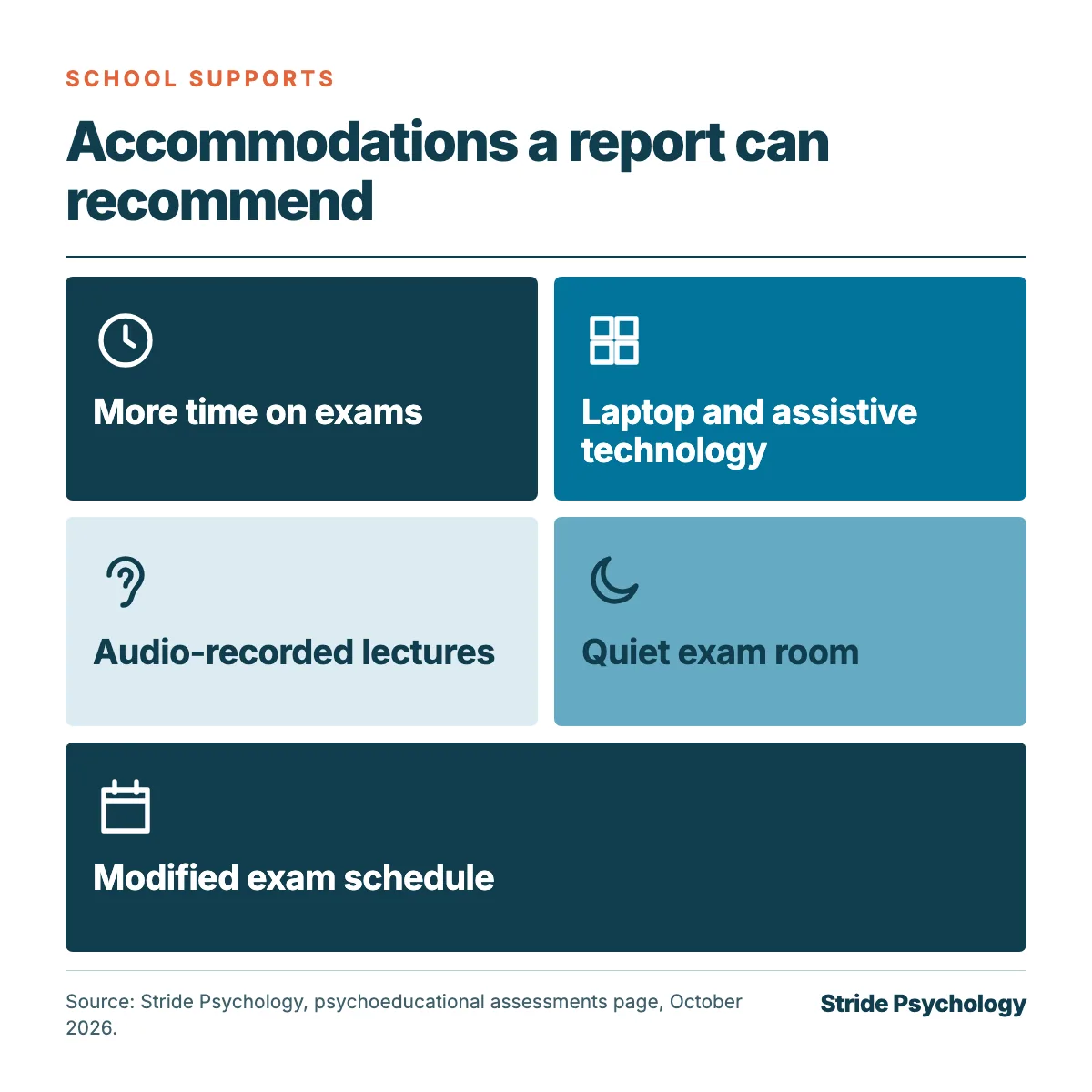
The school team uses it to plan supports. In Alberta, that plan is often written as an IPP, an Individualized Program Plan, which records the student's goals and supports. Common accommodations a report can recommend:

  • More time to complete tests and exams.
  • A laptop and assistive technology, such as speech to text.
  • Permission to audio-record lectures.
  • Exams in a quiet, supervised room.
  • A modified test and exam schedule.

Accommodations a psychoeducational report can recommend: more time on exams, a laptop and assistive technology, audio-recorded lectures, a quiet exam room, a modified exam schedule

Private or School Assessment?

A private assessment is an independent report you share with the school. Schools may have their own process and wait list. Parents choose a private assessment when they want the findings sooner, or want learning, attention and emotions covered in one report.

When the School Says It Lacks Resources

Ask for a meeting about the report. Ask which recommendations the school can put in place now, and how they will be recorded in your child's plan. Bring the report, and ask for decisions in writing. Parent coaching can help you prepare for that meeting and support your child at home.
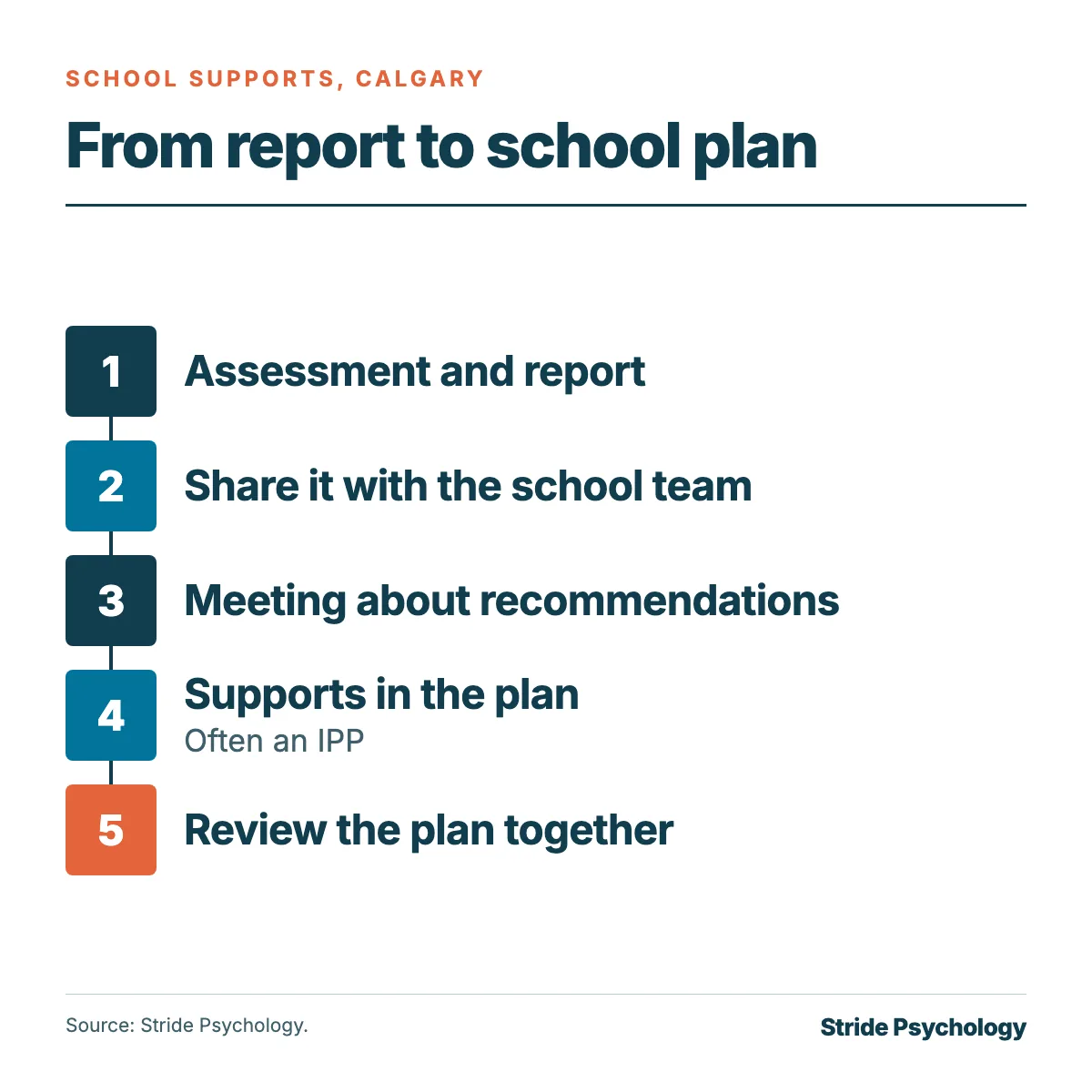
From report to school plan: assessment and report, share it with the school team, meeting about the recommendations, supports recorded in the plan, often an IPP, then review the plan together

How to Choose a Psychologist

Our guide on choosing a psychologist for a psychoeducational assessment lists what to compare. Most individual insurance plans provide coverage for assessment and counselling services. While Alberta Health Care does not currently cover these services, they may qualify as medical expenses on your tax return. The current fee is on our Fees page. Reach out through our contact page to book a free 20-minute consultation.

Sources

  1. What is an Individualized Program Plan (IPP)?, Calgary Board of Education, Queen Elizabeth High School, read 2026-10-30


Getting School Support for a Child with Complex Learning Needs in Calgary

Frequently Asked Questions

01

How do Calgary parents get school support for a child with complex learning needs?

Calgary parents usually start by documenting the child's needs with a psychoeducational assessment from a registered psychologist, then sharing the report with the school team to plan supports. The report from Stride Psychology describes the child's learning profile and lists specific accommodations, which gives the school and parents a shared starting point.

02

Which Calgary psychologists do assessments that schools use to plan supports?

Private registered psychologists in Calgary do psychoeducational assessments that schools use to plan supports, including programming such as an IPP. Stride Psychology's psychoeducational reports explain a student's strengths and challenges and list recommended accommodations for school, home and daily life, so the school team can act on them.

03

What is an IPP?

An IPP is an Individualized Program Plan, the written plan an Alberta school uses to describe the supports and goals for a student with special education needs. A psychoeducational or gifted assessment report can help the school understand a child's learning profile and guide the IPP, enriched programming and classroom supports.

04

What accommodations can a psychoeducational report recommend?

A psychoeducational report from Stride Psychology can recommend accommodations such as more time to complete tests and exams, access to a laptop and assistive technology like speech to text, permission to audio-record lectures, writing exams in a quiet supervised room, and a modified test and exam schedule, explaining why each fits the student.

05

Does a private assessment replace the school's own assessment?

A private psychoeducational assessment is an independent assessment that parents can share with the school. Schools may also have their own assessment process and wait list. Parents choose a private assessment when they want the findings sooner or want a full picture of learning, attention and emotions in one report, then share it with the school team.

06

What should I do if the school says it lacks resources?

Ask the school team to meet with you about the report's recommendations, which accommodations they can put in place now, and how they will record them in your child's plan. Bring the report and ask for decisions in writing. A psychologist or parent coach can help you prepare for that meeting.

07

Does a psychoeducational assessment cover behaviour and emotions too?

Yes. A psychoeducational assessment at Stride Psychology answers questions about cognitive, academic, social, emotional, behavioural and adaptive functioning. It screens for learning disorders and also for ADHD, anxiety and depression, emotional dysregulation, behavioural challenges and executive functioning difficulties, which often matter for a child with complex needs.

08

How do I book a psychoeducational assessment in Calgary?

Reach out to Stride Psychology through the contact page or by phone to book a free 20-minute consultation. You do not need a referral. The psychologist hears your concerns, confirms whether a psychoeducational assessment fits, and outlines the number of appointments and when the written report usually arrives.

Free 20-Minute Consultation

Ready to Talk? We Can Help.

You deserve care that meets you where you are. We're here to support you.

Call (403) 768-2208