


Masking in autism means hiding or adapting autistic traits to fit in. Adults who mask, including many women, are sometimes diagnosed late because their traits were missed or misunderstood. A thorough adult assessment looks at the whole life story, so masked traits can be recognized.
What Is Masking?
Masking means adapting to fit in. It can include copying how others talk, rehearsing conversations, or holding back reactions to sound, light or touch in public. It can work well enough that teachers, doctors and even family do not see the traits underneath.
Why Are Some Adults Diagnosed Late?
Signs of autism often appear in early childhood. Still, many people, especially those with more subtle traits, do not receive a diagnosis until later in life. Some adults come to an assessment after years of feeling different without knowing why.
Autism can look different from person to person. Some adults have traits that are subtle, masked or misunderstood, which makes them harder to recognize without a thorough assessment.
How Does an Assessment Find Masked Traits?
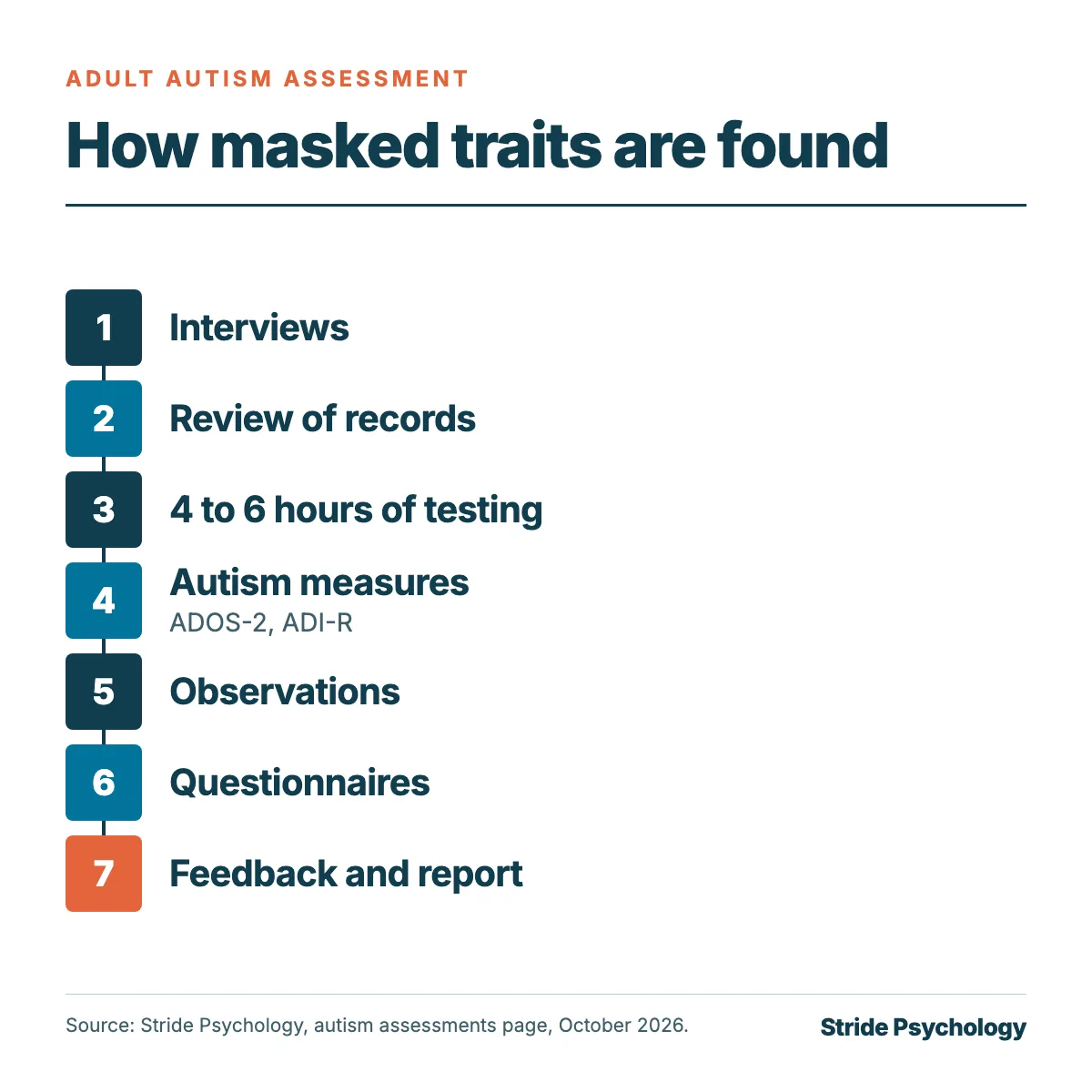
For adults, we explore how traits have shown up across the whole lifetime, including the ways a person may have learned to mask or adapt. The assessment may include:
- Intake and clinical interviews about childhood, school, work and relationships.
- Review of records.
- 4 to 6 hours of testing.
- Standardized autism measures, such as the ADOS-2 and ADI-R.
- Observations of social communication.
- Questionnaires from more than one person.
- Feedback meeting.
- Comprehensive written report.
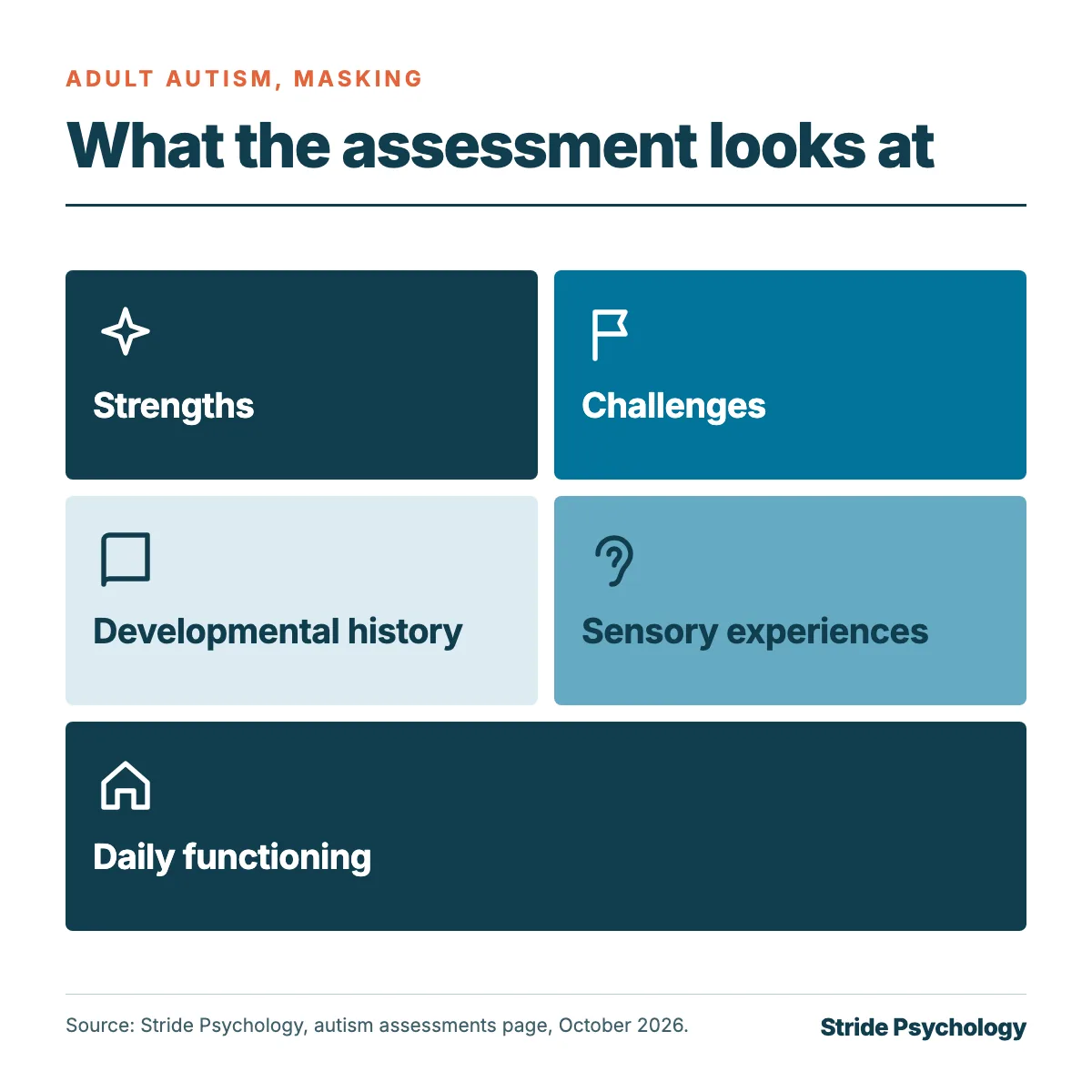
We look at the full picture: strengths, challenges, developmental history, sensory experiences and day-to-day functioning.
Which Psychologists in Calgary Assess Adult Women?
Look for a psychologist who assesses adults regularly, asks about the whole life story, and uses standardized measures alongside interviews. We assess adults of any gender at our downtown Calgary office. See our guide to adult autism assessments in Calgary.
After the Assessment
The report can support workplace accommodations, funding and counselling. If you want support after the assessment, you can work with a psychologist in adult counselling. Our current fees are on our Fees page.
How to Book
Reach out through our contact page or give us a call to book a free 20-minute consultation.