


Every child has hard days. The question parents bring to us is whether the hard days have become a pattern: a child who has gone quiet, a teen whose door is always closed, meltdowns that come more often, sleep that has fallen apart, a school that keeps calling. This guide explains when counselling may help, what a child psychologist does, how parents are part of it, and what it costs.
When Might a Child Need Counselling?
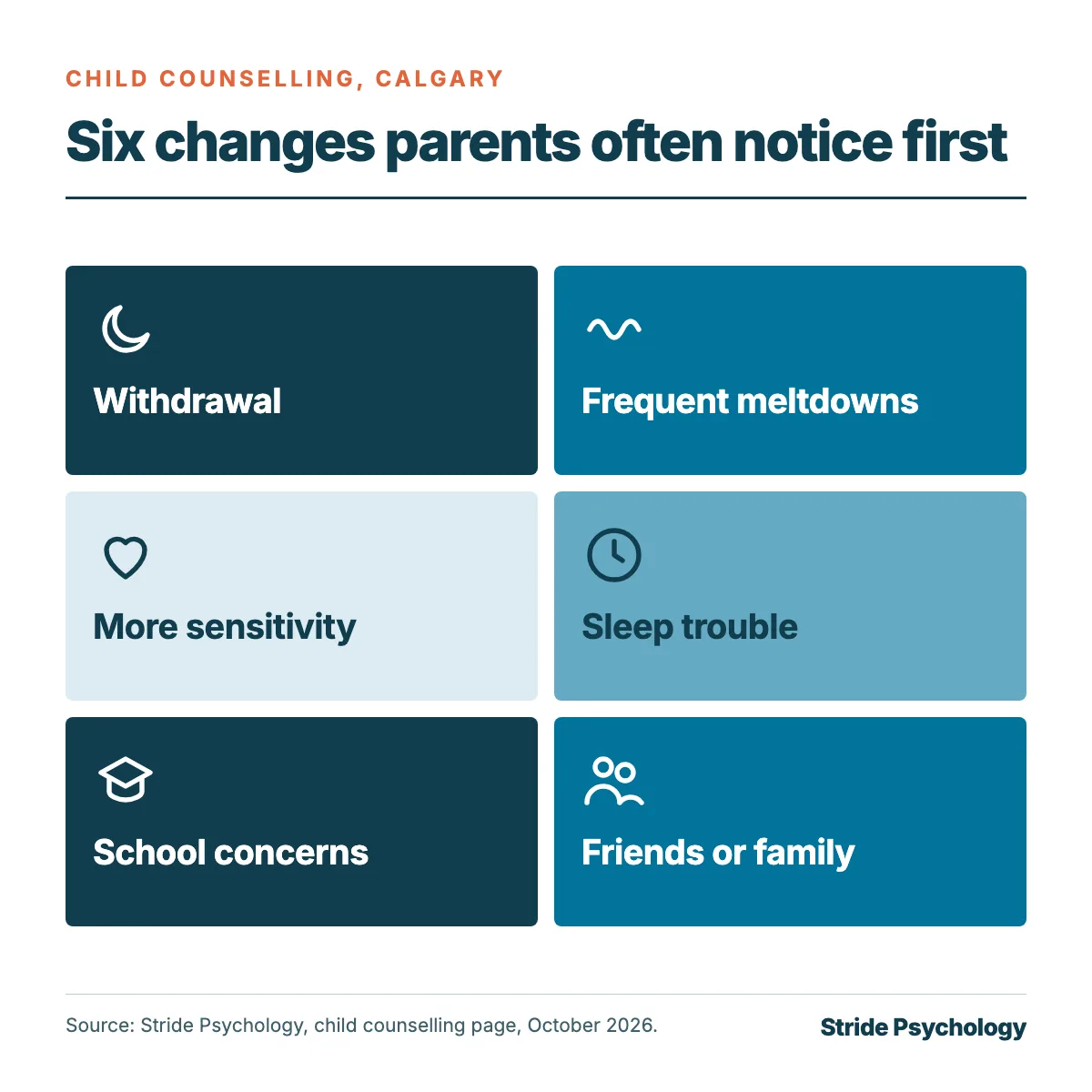
Emotional ups and downs are a normal part of childhood. Counselling may be helpful when your child seems to be having a harder time than usual managing emotions, behaviour, relationships, school, or changes in their life. Parents often notice:
- Withdrawal from family, friends or activities they used to enjoy
- Frequent meltdowns or outbursts
- Increased sensitivity, worry or tearfulness
- Sleep difficulties
- School concerns, from falling grades to refusing to go
- Trouble with peers or within the family
One of these on its own is often a phase. Several of them, lasting weeks and affecting daily life, are a reason to ask.
What Concerns Does Child Counselling Help With?
At Stride Psychology, we provide a compassionate, non-judgmental space where children and teens can process their experiences, understand themselves better, and develop tools that support them at home, at school and in daily life. We support:
- ADHD
- Anxiety, depression and emotional regulation
- Self-esteem and resilience
- Grief, loss and traumatic stress
- Behavioural and social challenges
- Parent-child conflict and family relationships
- Sleep and technology-related concerns
- Life transitions and changes
- School-related concerns, including bullying, learning difficulties and peer conflict
What Does a Child Psychologist Do?
A child psychologist helps children understand and express their thoughts and feelings in healthy ways. The goal is to help a child develop tools to manage what they are experiencing now and in the future. Child psychologists are empathetic and compassionate, and they are also impartial. That is why they can offer a perspective that close family members and friends find hard to give.
Sessions fit the child's age. A young child may work through play and drawing. A teen may prefer to talk.
How Are Parents Involved in Child Counselling?
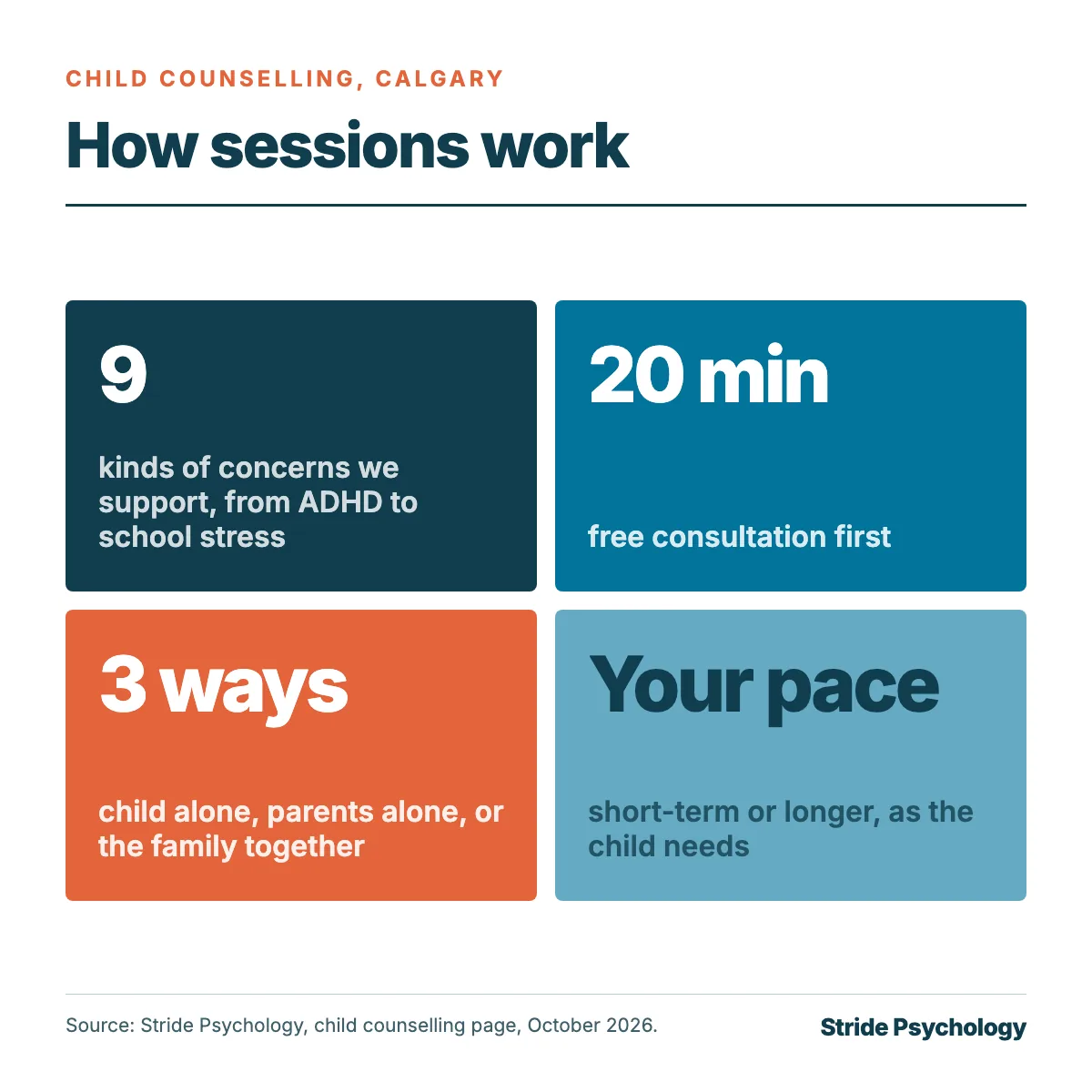
Depending on your child's age and needs, our child psychologists work with parents and caregivers as well as the child. Sessions may involve parents only, the child only, or the family together, depending on what is most helpful.
We also offer parent coaching, which helps caregivers understand their child's needs, strengthen the parent-child relationship, and find strategies that bring more consistency, connection and calm at home. Many parents use it alongside their child's counselling, and some use it on its own.
Can Children Be Depressed or Anxious?
Yes. Children can feel anxious, sad, overwhelmed or stressed, even when they do not show it outwardly. Because children often do not have the words to explain what they are experiencing inside, parents may not know everything their child is carrying. Counselling helps a child understand what they are feeling and receive support in a way that makes sense for them.
Does Insurance Cover Child Counselling?
Most individual insurance plans provide coverage for assessment and counselling services. While Alberta Health Care does not currently cover these services, they may qualify as medical expenses on your tax return. Our Fees page lists the current rates and explains insurance, tax receipts and payment.
How Do I Book Child Counselling in Calgary?
Reach out through our contact page or give us a call. A free 20-minute consultation lets us hear what you are seeing, suggest whether counselling, parent coaching or an assessment fits best, and match your child with a psychologist.