


Deciding to book a first counselling session often takes longer than the session itself. People wait until they have the right words, or a clear reason, or a worse week. You need none of those. This guide explains what the first session at Stride Psychology is like, what we support, how long counselling takes, what stays confidential, and what it costs.
You Do Not Have to Have It Figured Out
Counselling can be a space to pause, reflect and understand yourself better, whether you are dealing with something difficult or want more support as you move through life. Some people come during painful or challenging seasons. Others come because they are ready to understand patterns, process experiences, or reconnect with what they need.
You do not need the right words, a clear plan, or a specific reason to begin. You need to be ready to show up for yourself, and we take it from there.
What Happens in a First Counselling Session?
Your first session is about starting the conversation. We talk about what brought you in, what feels important right now, and what kind of support may be helpful. There is no pressure to have everything figured out or to share everything right away. We move at a pace that feels comfortable for you.
By the end of the hour, you and your psychologist have a shared sense of where to begin and how often to meet. Nothing is locked in. The plan changes as your needs do.
What Does Adult Counselling Help With?
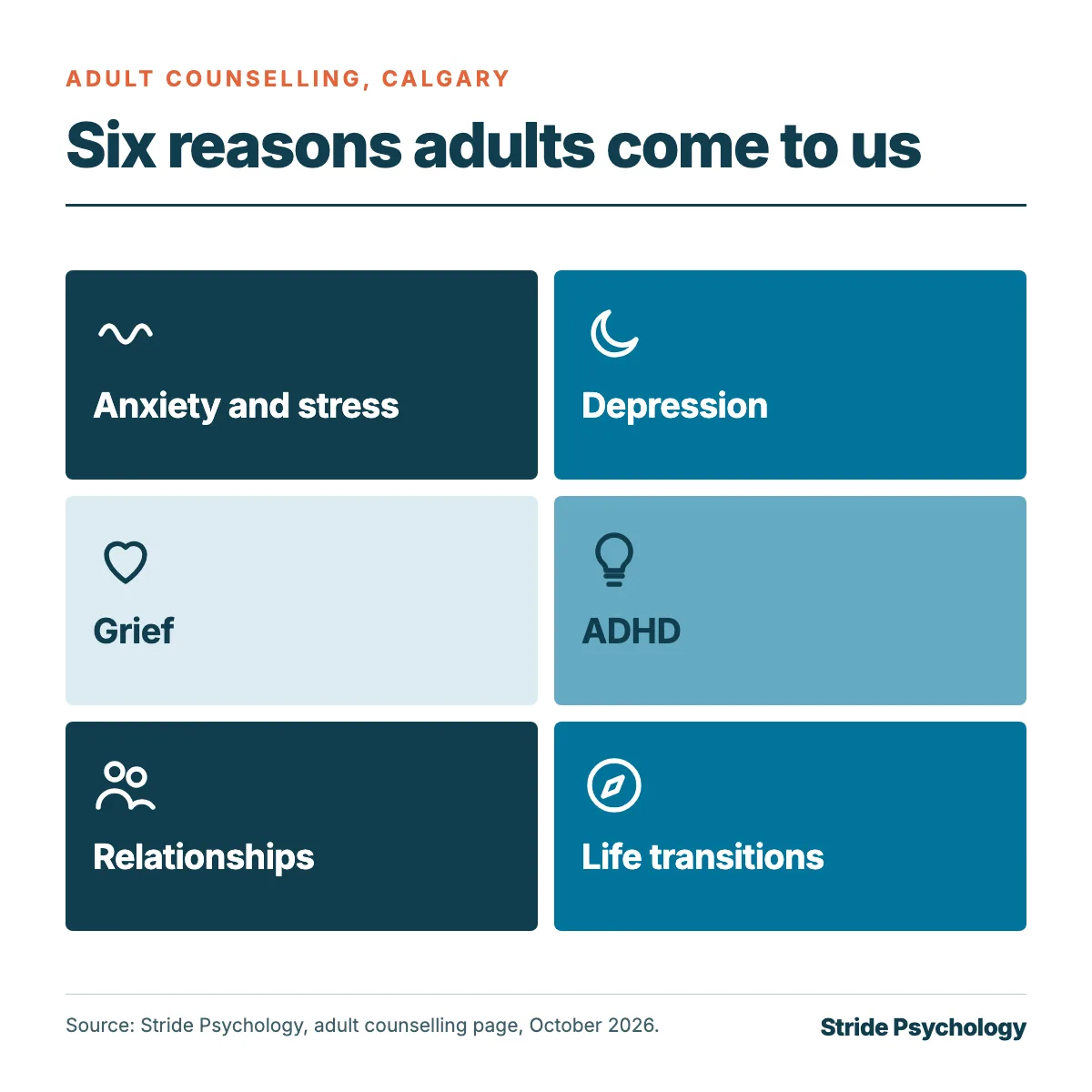
We support adults with a wide range of concerns, including anxiety, depression, stress, grief, ADHD, relationship and marital difficulties, life transitions, self-esteem and trauma. Some people bring one specific difficulty. Others want space to reflect and grow. Both are reasons to come.
What Approaches Do Our Psychologists Use?
Our team uses evidence-based approaches, and each psychologist brings their own training and therapeutic style. Across the team these include Cognitive Behaviour Therapy (CBT), Acceptance and Commitment Therapy (ACT), Eye Movement Desensitization and Reprocessing (EMDR), Dialectical Behaviour Therapy (DBT), Solution-Focused Therapy, Narrative Therapy and Mindfulness-Based Stress Reduction. Support is matched to your needs, goals and preferences. The approach is chosen to fit the person.
Our team page lists each psychologist's approaches, languages and availability, so you can see who may fit before you book.
How Long Does Counselling Take?
Counselling looks different for everyone. Some people benefit from short-term support. Others choose to continue longer. We talk about your goals at the start and move at a pace that feels right for you.
Is What I Say in Counselling Confidential?
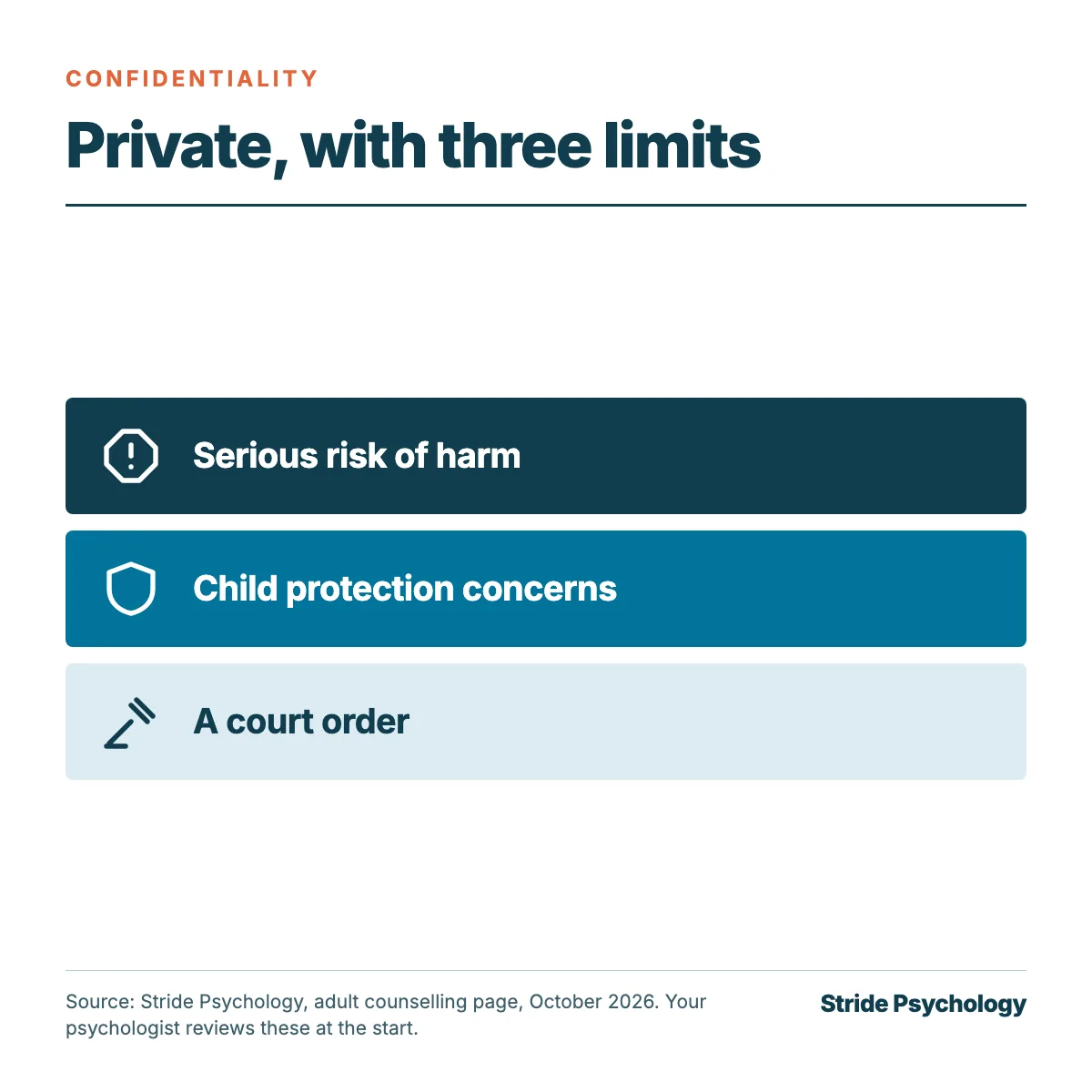
What you share in counselling is confidential and protected by professional and legal standards. Your psychologist reviews confidentiality with you at the beginning of counselling, including the limited situations where information may need to be shared: concerns about serious risk of harm, child protection concerns, or a court order.
Can Counselling Help with ADHD?
ADHD is one of the concerns adult counselling supports. If you have not been assessed and want to know whether ADHD is part of the picture, an ADHD assessment gives a clear answer and a written report you can use for workplace or post-secondary supports. Counselling can run alongside it or follow it.
Does Insurance Cover Counselling?
Most individual insurance plans provide coverage for assessment and counselling services. While Alberta Health Care does not currently cover these services, they may qualify as medical expenses on your tax return. The hourly rate depends on the psychologist. Our Fees page lists the current rates and covers insurance, tax receipts, payment and cancellations.
How Do I Book a First Counselling Session?
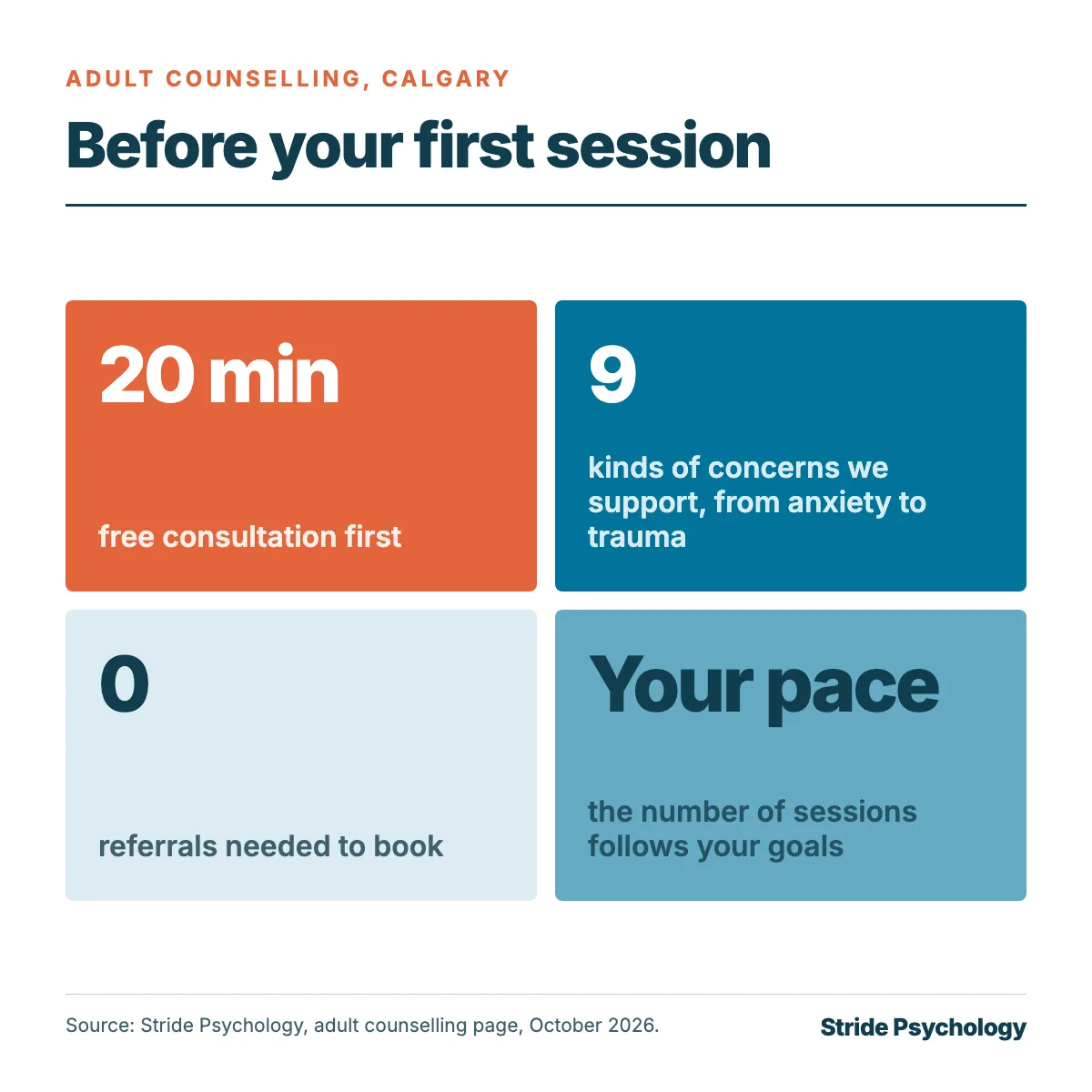
Reach out through our contact page or give us a call. A free 20-minute consultation is a chance to say what is going on, ask your questions, and be matched with a psychologist. The first full session follows from there.